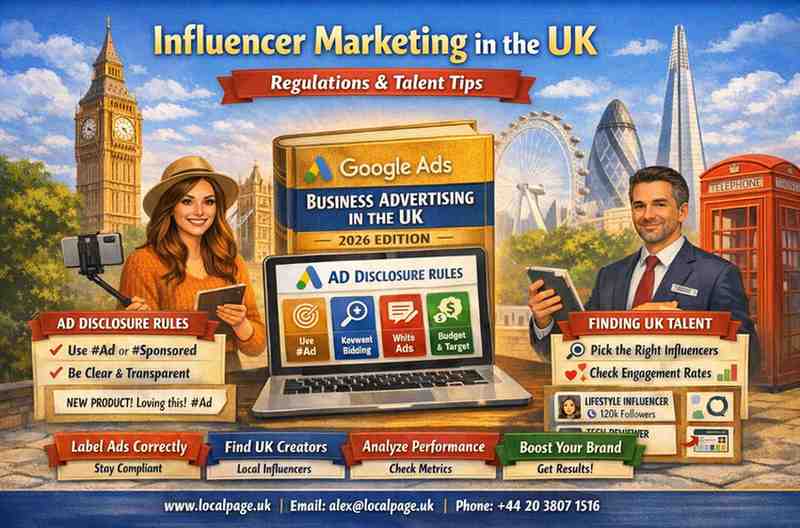
Influencer Marketing in the UK: Regulations for “Ad” Disclosure and Finding UK Talent
Influencer marketing has emerged as a powerful component of business advertising UK strategies, offering brands the opportunity to connect with audiences through authentic voices they trust. As we navigate through 2026, the influencer marketing landscape in the United Kingdom continues to evolve, shaped by changing consumer preferences, platform algorithms, and increasingly stringent regulatory requirements. This comprehensive guide explores the critical regulations governing influencer marketing in the UK, particularly around “Ad” disclosures, and provides practical strategies for finding and collaborating with UK influencer talent.
The rise of influencer marketing represents a fundamental shift in how businesses approach advertising. Rather than broadcasting messages through traditional channels, brands are now partnering with content creators who have built dedicated communities around specific niches and interests. This approach allows for more targeted, authentic, and engaging forms of business advertising UK that resonate with modern consumers who are increasingly skeptical of traditional advertising tactics.
Understanding the UK Regulatory Landscape for Influencer Marketing
The UK regulatory environment for influencer marketing has become increasingly sophisticated as the industry has matured. The Advertising Standards Authority (ASA) and Competition and Markets Authority (CMA) have established clear guidelines to ensure transparency and protect consumers from misleading content. These regulations require that paid partnerships and sponsored content be clearly identifiable as advertising, regardless of the platform or format used.
At the heart of UK influencer marketing regulations is the principle of transparency. Influencers must clearly disclose when content has been paid for, incentivized, or otherwise influenced by a commercial relationship. This requirement applies across all platforms, including Instagram, TikTok, YouTube, Twitter, and blogs. The ASA has been increasingly vigilant in enforcing these rules, with high-profile cases involving UK influencers who failed to properly disclose paid partnerships resulting in public rulings and required corrective actions.
For businesses engaging in influencer marketing as part of their business advertising UK strategy, understanding these regulations is not just about compliance—it’s about building trust with audiences. Consumers are more likely to engage with content from brands and influencers who demonstrate transparency and authenticity. By adhering to disclosure requirements, businesses protect themselves from regulatory action while building more meaningful connections with their target audiences.
The “Ad” Disclosure Requirement: What UK Businesses Need to Know
The “Ad” disclosure requirement is perhaps the most critical regulatory consideration for UK influencer marketing campaigns. The ASA’s guidelines require that any content for which payment, free products, or other incentives have been provided must be clearly labeled as advertising. This applies regardless of whether the influencer has creative control over the content or how much editorial freedom they have.
For UK-based influencer marketing, the ASA recommends using clear and unambiguous labels such as “#Ad” or “#Advertisement” at the beginning of posts. These labels must be prominent and easily noticeable to viewers, without requiring them to click “see more” or take additional actions to discover the commercial nature of the content. Vague terms like “#spon,” “#collab,” or “#gifted” are considered insufficient by the ASA and may not meet disclosure requirements.
The disclosure requirements extend beyond social media posts to include all forms of influencer content, including blog posts, YouTube videos, and even podcast mentions. For video content, verbal disclosures may be appropriate, but they must be clear and prominent, not buried in the middle of fast-paced content or mentioned briefly at the end. A London-based beauty brand learned this lesson the hard way when their YouTube collaboration was flagged for insufficient disclosure, despite the influencer mentioning the partnership briefly in the video description.
Finding the Right UK Influencer Talent for Your Brand
Identifying and partnering with the right influencer talent is crucial for successful business advertising UK campaigns. The UK influencer landscape is diverse, with creators spanning various niches, audience sizes, and engagement levels. Finding the perfect match requires a strategic approach that goes beyond follower counts to consider audience demographics, engagement rates, content quality, and brand alignment.
Begin by defining your campaign objectives and target audience. Are you looking to raise brand awareness, drive sales, or promote a specific product? Understanding your goals will help you identify influencers whose audiences and content style align with your campaign needs. For example, a Bristol-based sustainable fashion brand found greater success partnering with micro-influencers who had highly engaged followers interested in ethical fashion, rather than larger fashion influencers with broader but less engaged audiences.
For businesses seeking a streamlined approach to finding UK influencer talent, business advertising platform UK solutions can connect you with vetted influencers who match your brand values and target audience. These platforms often provide detailed analytics and performance data to help you make informed decisions.
When evaluating potential influencer partners, look beyond surface-level metrics to assess the quality of their engagement and the authenticity of their content. Review their previous collaborations to see how they integrate branded content naturally and whether their audience responds positively. A Manchester-based food delivery service increased their conversion rates by 40% by partnering with food influencers who had smaller but highly engaged local followings, rather than national food bloggers with larger but less targeted audiences.
Navigating UK Influencer Tiers: From Micro to Mega Influencers
The UK influencer ecosystem is typically segmented into tiers based on follower count, with each tier offering distinct advantages for different business advertising UK objectives. Understanding these tiers and their respective strengths can help you select the right mix of influencers for your campaigns and budget.
Micro-influencers (typically 5,000-50,000 followers) often boast higher engagement rates and more niche audiences. They tend to have stronger relationships with their followers and can be more cost-effective for businesses with limited budgets. A Edinburgh-based skincare brand achieved a 7:1 return on investment by working primarily with micro-influencers in the 10,000-20,000 follower range, who had highly engaged audiences interested in sustainable beauty products.
Macro-influencers (typically 50,000-500,000 followers) offer broader reach while still maintaining relatively high engagement levels. They often specialize in specific niches and can provide a balance of reach and relevance. A Birmingham-based fitness apparel company found success partnering with macro-influencers in the fitness space who had established credibility with their audiences while offering broader reach than micro-influencers.
Mega-influencers and celebrities (typically 500,000+ followers) offer massive reach but come with higher costs and potentially lower engagement rates. They’re most effective for awareness campaigns and product launches where broad visibility is the primary objective. A London-based luxury watch brand successfully launched a new collection by partnering with a well-known UK celebrity, generating significant media coverage and social buzz.
Building Effective Influencer Partnerships: Best Practices for UK Businesses
Creating successful influencer partnerships requires more than simply finding creators with large followings. The most effective business advertising UK campaigns through influencers are built on authentic relationships, clear communication, and mutual respect between brands and creators. These partnerships work best when influencers have genuine affinity for the brand and creative freedom to present products in ways that resonate with their unique audience.
Begin by establishing clear campaign objectives and key performance indicators (KPIs) before reaching out to potential influencer partners. Whether you’re aiming to increase brand awareness, drive website traffic, or generate sales, having specific, measurable goals will help you evaluate success and optimize your approach. A Glasgow-based sustainable home goods brand defined clear KPIs for their influencer campaign, including engagement rates, click-throughs, and conversion metrics, which allowed them to refine their strategy and achieve a 4:1 return on investment.
When approaching influencers, personalize your outreach and demonstrate genuine interest in their content. Generic, copy-pasted messages are often ignored by established influencers who receive numerous partnership requests. A Liverpool-based organic food company increased their influencer acceptance rate by 60% by referencing specific content pieces and explaining why their products aligned with each influencer’s values and audience interests.
Establish clear agreements regarding compensation, content ownership, usage rights, and performance expectations. Formal contracts help prevent misunderstandings and ensure both parties are aligned on deliverables and timelines. A Cardiff-based tech startup learned this lesson after an informal collaboration resulted in confusion about content usage rights, highlighting the importance of clear agreements even with smaller influencers.
Measuring Influencer Marketing ROI in the UK Context
Measuring the return on investment (ROI) of influencer marketing campaigns is essential for optimizing your business advertising UK strategy and demonstrating value to stakeholders. Unlike traditional advertising channels, influencer marketing presents unique measurement challenges due to the diverse platforms, content formats, and attribution models involved.
Begin by establishing clear measurement frameworks aligned with your campaign objectives. For awareness campaigns, metrics might include impressions, reach, engagement rate, and brand mentions. For conversion-focused campaigns, track click-through rates, conversion rates, cost per acquisition, and return on ad spend. A Leeds-based e-commerce retailer implemented comprehensive tracking using unique discount codes for each influencer, allowing them to precisely measure sales generated and calculate a 5.5:1 return on investment across their influencer program.
Utilize platform-specific analytics tools to gather performance data, but be aware of their limitations. Many social platforms provide basic engagement metrics but may not offer comprehensive conversion tracking. Consider implementing third-party tracking solutions or working with affordable business advertising UK services that provide advanced analytics and attribution modeling for influencer campaigns.
Remember that influencer marketing often delivers both short-term and long-term value. While immediate conversions are important, also consider metrics like brand sentiment, audience growth, and content reuse value. A Sheffield-based beauty brand found that while their influencer campaign generated immediate sales, the user-generated content continued to drive value months later when repurposed across their own marketing channels.
Geo-targeting with UK Influencers: Reaching Regional Audiences
The United Kingdom’s diverse regional markets present unique opportunities for businesses to connect with local audiences through geographically targeted influencer campaigns. By partnering with influencers who have strong connections to specific cities, regions, or communities, businesses can create more relevant and impactful business advertising UK campaigns that resonate with local audiences.
Regional influencers often have deeper connections to their local communities and can incorporate location-specific references, dialects, and cultural touchpoints that national influencers might miss. A Newcastle-based restaurant chain increased foot traffic by 35% in their target locations by partnering with local food influencers who highlighted regional menu items and used local dialect in their content.
When implementing geotargeted influencer campaigns, consider the specific characteristics and preferences of each regional market. What resonates with audiences in London might not have the same impact in Manchester or Glasgow. A Birmingham-based fashion retailer discovered that their influencer content performed best when adapted to reflect local fashion trends and shopping habits, rather than using a one-size-fits-all national approach.
For businesses with physical locations, consider implementing location-specific calls to action in influencer campaigns. Whether encouraging visits to specific stores, promoting region-specific offers, or highlighting local events, these targeted approaches can drive measurable foot traffic and sales. A Bristol-based bookstore chain increased in-store visits by 28% by partnering with local book influencers who promoted in-store events and signings at specific locations.
Voice Search Optimisation for Influencer Content in the UK
As voice search continues to grow in popularity across the UK, optimizing influencer content for voice queries is becoming increasingly important for effective business advertising UK. With an estimated 50% of UK households expected to own smart speakers by 2026, influencer content that performs well in voice search can significantly extend its reach and impact.
Voice search optimization for influencer content begins with understanding how people ask questions verbally versus typing them. Voice queries tend to be longer, more conversational, and often take the form of complete questions. Influencers can incorporate these natural language patterns into their content, particularly in video descriptions, blog posts, and podcast content. A London-based tech reviewer increased their discoverability through voice search by incorporating question-based headings and natural language answers that mirrored how people speak about tech products.
Featured snippets, also known as “position zero” in search results, are particularly important for voice search optimization, as voice assistants often read these snippets aloud in response to queries. Influencers can increase their chances of appearing in featured snippets by creating content that directly answers common questions in their niche. A Manchester-based food influencer saw a 40% increase in voice search-driven traffic after creating content that directly answered common cooking questions in a clear, concise format.
For businesses working with podcast influencers, voice search optimization is particularly critical. Podcast episodes that answer specific questions can become valuable resources for voice search queries. A Glasgow-based financial services company partnered with personal finance podcasters to create episodes addressing common financial questions, resulting in increased brand visibility through voice search queries about financial planning.
AI and Semantic SEO: Enhancing Influencer Content Discovery
Artificial intelligence and semantic search technologies are transforming how influencer content is discovered and consumed in the UK. As search engines and social platforms become increasingly sophisticated at understanding context and intent, optimizing influencer content for semantic SEO can significantly extend its reach and impact as part of your business advertising UK strategy.
Semantic SEO focuses on creating comprehensive, topic-focused content that addresses the full range of questions and concerns related to a product or service, rather than just targeting specific keywords. Influencers can enhance their content’s semantic SEO performance by creating in-depth content that explores topics from multiple angles. A Liverpool-based beauty influencer increased her search visibility by 60% after creating comprehensive skincare guides that addressed multiple aspects of skincare routines, rather than focusing solely on individual products.
AI-powered content tools are helping UK influencers create more effective and discoverable content. These tools can analyze search trends, identify content gaps, and even suggest optimal posting times based on audience behavior. A Birmingham-based fashion influencer used AI tools to identify emerging fashion trends in her niche, creating content that addressed these trends before they became mainstream and significantly increasing her engagement and search visibility.
For businesses seeking to leverage AI and semantic SEO in their influencer marketing, sponsored business advertising UK solutions can provide advanced optimization capabilities. These platforms use AI and machine learning to optimize influencer content for search visibility and engagement, ensuring maximum return on your influencer marketing investment.
Conversion Strategy: Turning Influencer Engagement into Business Results
While engagement metrics are important, the ultimate success of influencer marketing as part of your business advertising UK strategy depends on its ability to drive meaningful business results. Developing an effective conversion strategy ensures that the awareness and engagement generated by influencer content translates into leads, sales, and other valuable outcomes for your business.
Clear and compelling calls to action (CTAs) are essential for converting influencer engagement into business results. Whether directing followers to visit your website, use a discount code, or participate in a promotion, your CTAs should be specific, urgent, and easy to follow. A Manchester-based e-commerce brand increased their conversion rate from influencer campaigns by 35% by working with influencers to create clear, time-sensitive CTAs that encouraged immediate action.
Landing page optimization is equally critical for converting traffic from influencer content. Create dedicated landing pages that align closely with the influencer’s content and messaging, providing a seamless experience from social media to conversion. A London-based skincare brand created custom landing pages for each influencer partnership, featuring the influencer’s image and specific product recommendations, resulting in a 40% increase in conversion rates compared to their standard product pages.
Consider the entire customer journey, not just the immediate conversion point. Many customers may require multiple touchpoints before converting, so implement strategies to capture leads at earlier stages. Email newsletters, downloadable guides, and webinars can all capture leads who aren’t ready to make an immediate purchase but represent future conversion opportunities. A Glasgow-based fitness brand increased their overall conversion rate by 50% by implementing a comprehensive lead nurturing system that guided prospects from initial influencer engagement to purchase.
Case Study: Successful Influencer Marketing in the UK Beauty Industry
To illustrate the power of effective influencer marketing within the business advertising UK landscape, let’s examine the case of Glow-Up Cosmetics, a Leeds-based indie beauty brand that successfully used influencer partnerships to establish national distribution and increase sales by 250% in just 18 months.
Glow-Up’s strategy began with careful research to identify UK beauty influencers whose values aligned with their brand ethos of clean, cruelty-free beauty. They initially focused on micro-influencers in the 10,000-30,000 follower range, who had highly engaged audiences interested in ethical beauty products. These early partnerships generated authentic content and valuable customer feedback that helped refine their product offerings.
As the brand grew, they expanded to work with mid-tier and macro-influencers, creating a diverse portfolio of partnerships that balanced reach with authenticity. Each collaboration included clear disclosure requirements per ASA guidelines, unique discount codes for tracking, and creative freedom that allowed influencers to present products authentically to their audiences.
Perhaps most importantly, Glow-Up implemented comprehensive tracking from day one, using unique discount codes, UTM parameters, and customer surveys to attribute sales accurately. This data-driven approach allowed them to continuously optimize their influencer strategy, reallocating budget to the most effective partnerships and content types.
This case study demonstrates how a strategic, compliant, and data-driven approach to influencer marketing can deliver exceptional results for UK businesses, even with limited initial resources. By focusing on authentic partnerships, regulatory compliance, and measurable outcomes, Glow-Up built a sustainable marketing engine that continues to drive their growth.
Common Pitfalls to Avoid in UK Influencer Marketing
While influencer marketing offers significant potential for business advertising UK campaigns, several common pitfalls can undermine effectiveness and even result in regulatory issues. Being aware of these challenges can help you navigate the influencer landscape more successfully and avoid costly mistakes.
Perhaps the most serious pitfall is inadequate disclosure of paid partnerships, which can result in ASA enforcement action and damage to brand reputation. Many businesses mistakenly believe that disclosure is solely the influencer’s responsibility, but brands can also be held accountable for non-compliant content. A London-based fashion retailer faced public scrutiny when an influencer failed to properly disclose their paid partnership, highlighting the importance of clear communication and verification of disclosure compliance.
Another common mistake is focusing solely on follower counts rather than engagement and audience relevance. Influencers with large followings but low engagement rates may deliver limited value despite high costs. A Birmingham-based tech startup learned this lesson after investing heavily in a celebrity endorsement that generated impressive impression numbers but minimal engagement or conversions.
Failing to establish clear agreements and expectations can also lead to disappointing results. Without formal contracts outlining deliverables, timelines, usage rights, and disclosure requirements, both brands and influencers may have mismatched expectations. A Cardiff-based food delivery service experienced delays and inconsistent content when they relied on informal agreements rather than clear contracts with influencer partners.
Finally, many businesses neglect to measure the true impact of their influencer campaigns beyond surface-level metrics. Without proper tracking and attribution, it’s impossible to calculate ROI or optimize future campaigns. A Manchester-based e-commerce brand initially struggled to justify their influencer marketing spend until they implemented comprehensive tracking that revealed the true value of their campaigns.
The Future of Influencer Marketing in the UK: 2026 and Beyond
As we look toward the future of business advertising UK through influencer partnerships, several emerging trends are poised to reshape the landscape. Staying ahead of these developments will help businesses maintain their competitive edge and continue to connect with audiences through authentic influencer voices.
The rise of virtual and augmented reality influencers represents one of the most significant emerging trends. These computer-generated personalities offer brands complete control over messaging and appearance while eliminating potential human controversies. A London-based luxury fashion brand made headlines by partnering with a virtual influencer for their 2025 campaign, generating significant buzz and reaching younger audiences who responded positively to the innovative approach.
Regulatory evolution will continue to shape the UK influencer landscape, with increasingly specific requirements around disclosure, data privacy, and content authenticity. The ASA and CMA are developing more sophisticated monitoring technologies and guidelines to address emerging formats like short-form video and live streaming. Forward-thinking businesses are proactively adapting their practices to exceed current requirements, building trust with audiences and regulators alike.
Performance-based influencer partnerships are becoming more common, with compensation tied to specific business outcomes rather than flat fees. This approach aligns incentives between brands and influencers while providing more predictable ROI for businesses. A Glasgow-based sports nutrition brand shifted to a performance-based model, offering influencers commissions on sales generated, which resulted in more motivated partners and a 40% increase in conversion rates.
Finally, the diversification of influencer platforms beyond traditional social media is creating new opportunities for businesses. From podcasting and newsletter sponsorships to emerging platforms focused on specific niches, businesses have more options than ever to connect with audiences through trusted voices. The most successful business advertising UK strategies will be those that adapt to this evolving landscape with agility and creativity.
Building a Sustainable Influencer Marketing Strategy for UK Success
Developing a sustainable influencer marketing strategy requires a systematic approach that balances short-term results with long-term relationship building. By implementing a structured process, businesses can create effective business advertising UK campaigns through influencer partnerships that deliver consistent value over time.
Step 1: Define Your Objectives and KPIs
Begin by clearly defining what you want to achieve through influencer marketing. Whether your goal is to increase brand awareness, drive sales, or enter new markets, having specific, measurable objectives will guide your strategy and help you evaluate success. Establish key performance indicators that align with these objectives, such as engagement rates, conversion rates, or brand sentiment metrics.
Step 2: Develop Your Influencer Selection Criteria
Create a framework for evaluating potential influencer partners based on factors relevant to your brand and objectives. Consider audience demographics, engagement rates, content quality, brand alignment, and past performance. A Bristol-based sustainable fashion brand developed a scoring system that weighted audience engagement and brand values higher than follower count, resulting in more effective partnerships.
Step 3: Implement a Compliance Framework
Establish clear guidelines and processes to ensure all influencer content complies with UK regulations. This includes disclosure requirements, data protection considerations, and content guidelines. Provide training and resources to influencer partners to ensure they understand and implement these requirements consistently. A Manchester-based food brand created a comprehensive influencer guideline document that reduced compliance issues by 90%.
Step 4: Develop Measurement and Optimization Systems
Implement robust tracking systems to measure the impact of your influencer campaigns. Use unique discount codes, UTM parameters, and platform analytics to gather comprehensive performance data. Regularly review this data to identify what’s working and optimize your approach accordingly. A Leeds-based beauty brand held monthly performance reviews with their influencer partners, resulting in continuous improvement and a 45% increase in ROI over six months.
Step 5: Nurture Long-Term Relationships
Focus on building long-term relationships with influencers rather than treating them as one-off promotional partners. Provide fair compensation, creative freedom, and regular feedback to create mutually beneficial partnerships. A Glasgow-based lifestyle brand created an ambassador program that provided their top-performing influencers with exclusive access, long-term contracts, and revenue sharing opportunities, resulting in more authentic content and higher engagement rates.
Frequently Asked Questions About Influencer Marketing in the UK
In the UK, influencers must clearly disclose paid partnerships using unambiguous labels like “#Ad” or “#Advertisement.” This requirement applies to any form of compensation, including money, free products, or services. The ASA enforces these rules, and non-compliance can result in public rulings and required corrective actions.
Influencer rates vary widely based on follower count, engagement rate, platform, and content type. Micro-influencers might charge £50-£500 per post, macro-influencers £500-£5,000, and celebrities £10,000+. Many factors affect pricing, so research industry standards and consider the value delivered rather than just follower count.
Yes, both influencers and brands can be held responsible for non-disclosure. The ASA has taken action against both parties in cases where paid content wasn’t clearly identified as advertising. Brands are advised to include disclosure requirements in contracts and verify compliance before content goes live.
Start by researching hashtags and keywords related to your industry on social platforms. Use influencer marketing platforms, search Google for industry-specific blogs, and monitor which influencers your competitors are working with. Attend industry events where influencers may be speaking or networking.
Key metrics include engagement rate (likes, comments, shares), reach and impressions, click-through rates, conversion rates, and return on investment. The most important metrics depend on your campaign objectives—awareness campaigns might prioritize reach, while conversion-focused campaigns should track sales and leads.
While the disclosure principles apply across all platforms, the ASA provides platform-specific guidance. For Instagram, use “#Ad” at the beginning of posts. For YouTube, verbal disclosures and on-screen text are recommended. For Stories, use the paid partnership label or a clear “#Ad” overlay.
Small businesses can compete by offering unique value beyond payment, such as creative freedom, long-term relationships, or exclusive access. Micro-influencers often offer better engagement rates and cost-effectiveness. Authenticity and genuine product affinity can be more valuable than large budgets.
Key elements include deliverables, timeline, compensation, usage rights, disclosure requirements, content approval process, and performance metrics. Include specific language about ASA compliance to ensure regulatory adherence. Consider including exclusivity clauses and termination conditions.
AI is transforming influencer marketing through advanced analytics, content optimization, and even virtual influencers. AI tools can help identify optimal posting times, analyze audience sentiment, and predict content performance. Virtual influencers offer brands complete control but may lack the authenticity of human creators.
Key trends include increased regulatory scrutiny, the rise of virtual and AR influencers, performance-based partnerships, creator-led commerce, and diversification beyond traditional social platforms. Sustainability and authenticity are becoming increasingly important to UK audiences.
Ready to harness the power of influencer marketing for your UK business? Contact Local Page UK today for expert guidance on compliant and effective influencer strategies that deliver measurable results.
Email: alex@localpage.uk | Phone: +44 20 3807 1516 | Website: www.localpage.uk
Wrapping Up: Building Compliant and Effective Influencer Marketing Strategies
Influencer marketing has become an indispensable component of business advertising UK strategies, offering brands the opportunity to connect with audiences through authentic, trusted voices. As we’ve explored throughout this guide, success in this evolving landscape requires a careful balance of creativity, compliance, and strategic thinking.
The UK regulatory environment will continue to evolve as new platforms and formats emerge, making compliance an ongoing consideration rather than a one-time checklist item. Brands that prioritize transparency and build authentic partnerships will be best positioned to navigate this changing landscape while building trust with increasingly savvy consumers.
Looking ahead, the most successful influencer marketing strategies will be those that embrace emerging technologies and trends while maintaining the human connection that makes influencer marketing effective. Whether through virtual influencers, performance-based partnerships, or emerging platforms, the fundamental principle remains the same: authentic voices connecting with engaged communities.
For businesses looking to develop or refine their influencer marketing approach, the key is to start with clear objectives, prioritize compliance, build genuine relationships, and measure results rigorously. By following these principles, businesses of all sizes can harness the power of influencer marketing to achieve their business advertising UK objectives while building sustainable growth for the future.
For personalized guidance on implementing these strategies for your specific business, reach out to the team at Local Page UK. Our experts specialize in helping UK businesses navigate the complex influencer marketing landscape and develop strategies that drive real business results while maintaining full compliance with UK regulations. Contact us today to schedule a consultation and take your influencer marketing to the next level.
 LocalPage UK: Connecting Communities, Empowering British Business
Leave a comment